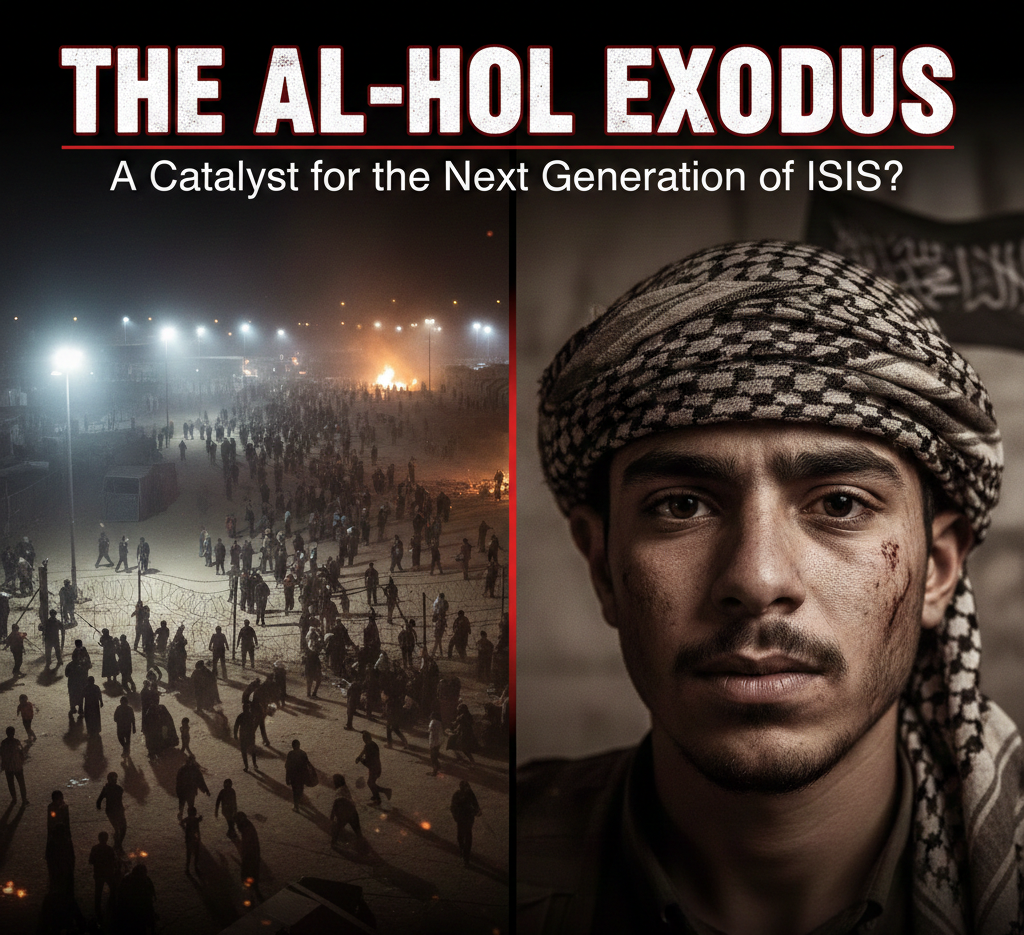
The sprawling Al-Hol camp in northeastern Syria, once dubbed a “ticking time bomb” by international observers, has finally begun to fracture. In a series of rapid geopolitical shifts in early 2026, the withdrawal of Kurdish-led Syrian Democratic Forces (SDF) and the subsequent takeover by Syrian government forces have triggered a chaotic exodus.
With over 10,000 residents reported to have escaped or been released in recent weeks, the regional security landscape is facing its most volatile moment since the fall of the Baghouz “caliphate” in 2019. This mass departure isn’t just a humanitarian crisis—it is a potential lifeline for an Islamic State (ISIS) resurgence.
The Security Vacuum of January 2026
The crisis reached a tipping point on January 20, 2026. Following a military offensive by the Syrian government and a subsequent ceasefire agreement, the SDF began withdrawing from its guarding duties at Al-Hol. In the six-hour window before government forces arrived to secure the perimeter, thousands of residents—many with deep-seated ties to ISIS—simply walked out.
- Mass Escapes: Reports indicate at least 10,000 residents fled during the transition.
- Failed Security: While the Syrian Interior Ministry attempted to re-establish control, they have struggled with “mass riots” and insufficient training, leading to further escapes in mid-February.
- Prisoner Transfers: Simultaneously, the U.S. military has begun transferring approximately 5,700 high-value ISIS detainees to Iraq to prevent further prison breaks, though this move has sparked its own set of human rights and security concerns.
Why This Fuels a Resurgence
The release and escape of Al-Hol’s population provide ISIS with three critical components for a comeback: manpower, messaging, and ideological continuity.
1. Replenishing the Ranks
For years, ISIS leadership has prioritized “Breaking the Walls”—a strategy focused on liberating its followers from captivity. The recent chaos has achieved what years of sleeper cell attacks could not. Among the escapees are seasoned facilitators and “radicalized” residents who can immediately integrate into existing insurgent cells in the Syrian desert (Badiya).
2. The “Cubs of the Caliphate”
Perhaps most concerning is the fate of the children. More than half of Al-Hol’s population consisted of minors, many of whom have known nothing but the camp’s barbed wire and extremist indoctrination.
“The emptying of Al-Hol marks the end of a physical site, but not the end of responsibility,” warns Save the Children.
Without structured reintegration, these displaced youths are highly vulnerable to recruitment by ISIS networks that offer a sense of belonging and a narrative of revenge against those who “abandoned” them.
3. Strategic Exploitation
ISIS is a master of utilizing “grievance politics.” The group is already leveraging the instability of the Syrian government’s takeover to frame itself as the only true protector of Sunnis in the region. The lack of a clear plan for the thousands transferred to Aleppo or Iraq allows ISIS to capitalize on the resulting social isolation and recidivism.
A Global Problem without a Global Solution
The closure of Al-Hol was always the intended goal, but the manner in which it is happening—uncoordinated and amidst active conflict—is the worst-case scenario.
| Current Status (Feb 2026) | Estimated Numbers |
| Escaped/Unaccounted For | 10,000+ |
| Transferred to Iraq | 5,700 (Detainees) |
| Relocated within Syria | Thousands (to Aleppo province) |
The international community’s failure to fast-track repatriations over the last five years has left a vacuum that the Syrian government and ISIS are now both rushing to fill. If these escapees are not tracked and the remaining population is not properly rehabilitated, the “ghost of the caliphate” may soon find a new home in the very territories it once lost.
Leave a Reply